
Conductor to conductor
Inline, tee, cross and parallel connections can join compatible conductors in an earthing grid or bonding network.
Permanent welded connections, shaped for the conductors and joint your project requires.
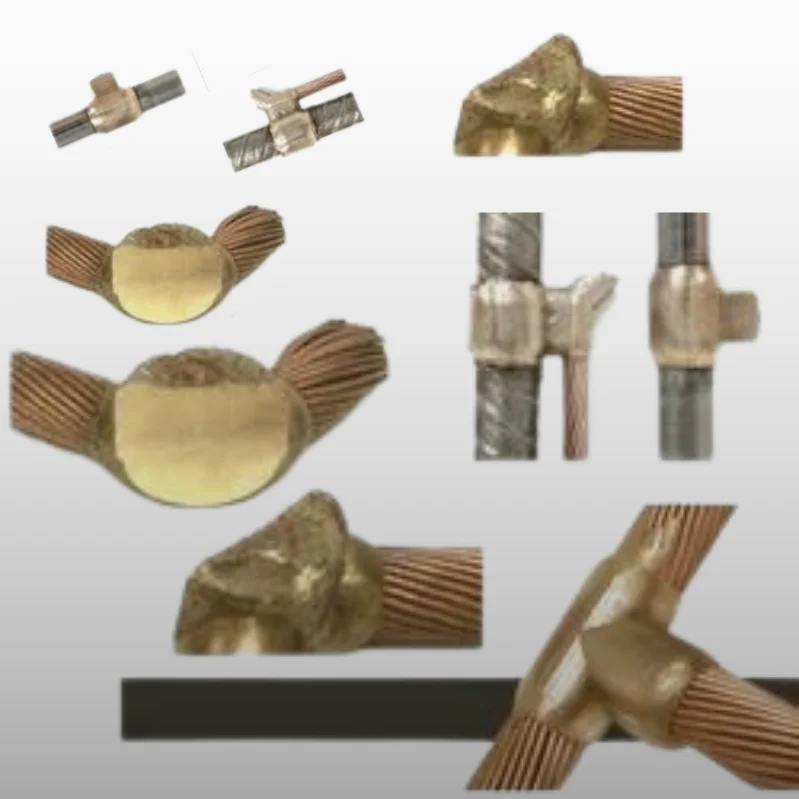 Welded connections
Exothermic welding creates a permanent metallurgical connection between compatible conductors using heat generated by a controlled chemical reaction. Explore joint forms, system components and selection guidance from Amiable Impex.
Exothermic welding is a method of joining compatible metal conductors using the heat produced by an exothermic reaction. In electrical earthing and grounding work, the reaction forms molten weld metal inside a purpose-designed mould. As it solidifies, it creates a metallurgical connection between the parts being joined.
Because the joint is welded rather than held only by mechanical pressure, a correctly specified and made connection does not rely on a bolt remaining tight. The exact result depends on the conductor material, dimensions, joint design, mould, weld material and installation procedure.
A matched graphite mould positions the conductors and defines the shape of the finished joint. The specified weld material reacts in the mould and flows into the joint cavity, where it bonds the connection. The welding reaction supplies its own heat; the ignition method and tools depend on the chosen system.
Each joint geometry and conductor size needs a compatible mould and weld-material selection. Installation should follow the instructions for the specific system, including conductor preparation, mould condition and appropriate hot-work precautions.
The gallery shows examples of possible forms; the required joint must be chosen for your actual conductor arrangement.
Inline, tee, cross and parallel connections can join compatible conductors in an earthing grid or bonding network.
Connections may be specified between a conductor and a compatible earth rod or electrode for grounding systems.
Some mould configurations accommodate flat copper tape or connections to suitable steel components, subject to the approved system design.
Exothermically welded connections are used in earthing and bonding networks where a permanent electrical path is required. Typical projects include substation ground grids, building earthing systems, lightning protection down-conductor networks and selected industrial grounding connections.
Suitability is project-specific. The conductor combination, fault-current duty, site environment and applicable specification should be reviewed before selecting a joint.
These details help identify the correct joint arrangement and compatible system components.
Material, type and cross-section or tape dimensions for every part being connected.
Inline, tee, cross, parallel, rod or structural connection, with a drawing where available.
Compatible graphite mould, weld material, ignition method and any required tools or accessories.
Quantity, installation environment, required documentation and destination country.
The accessories pictured in the gallery illustrate system components; confirm the exact items included in your quotation.
No. A welded joint forms through a metallurgical process, while a mechanical clamp secures conductors by pressure. The project specification determines which connection method is appropriate.
The heat for the weld comes from the exothermic reaction. Some systems use a powered ignition accessory, so check the ignition method for the selected equipment.
No. Mould selection depends on conductor materials, dimensions and the joint configuration. The weld material must also match the specified system.
Provide conductor materials and sizes, the joint type or drawing, quantity, installation location, required documentation and delivery country.